Homeowner guide
A practical decision framework
Direct answer: Repair is usually reasonable when the diagnosis is clear, the system is otherwise dependable, parts are available, and the repair cost is proportionate to remaining service life. Replacement becomes more compelling when failures repeat, major components are compromised, comfort problems persist, or the existing system cannot support the home’s needs.
Key takeaways
1
Get a measured diagnosis before discussing replacement.
2
Compare remaining-life risk, not only today’s repair bill.
3
Ductwork and sizing can matter as much as equipment efficiency.
4
Use matched equipment and written labor coverage.
Start with the failure
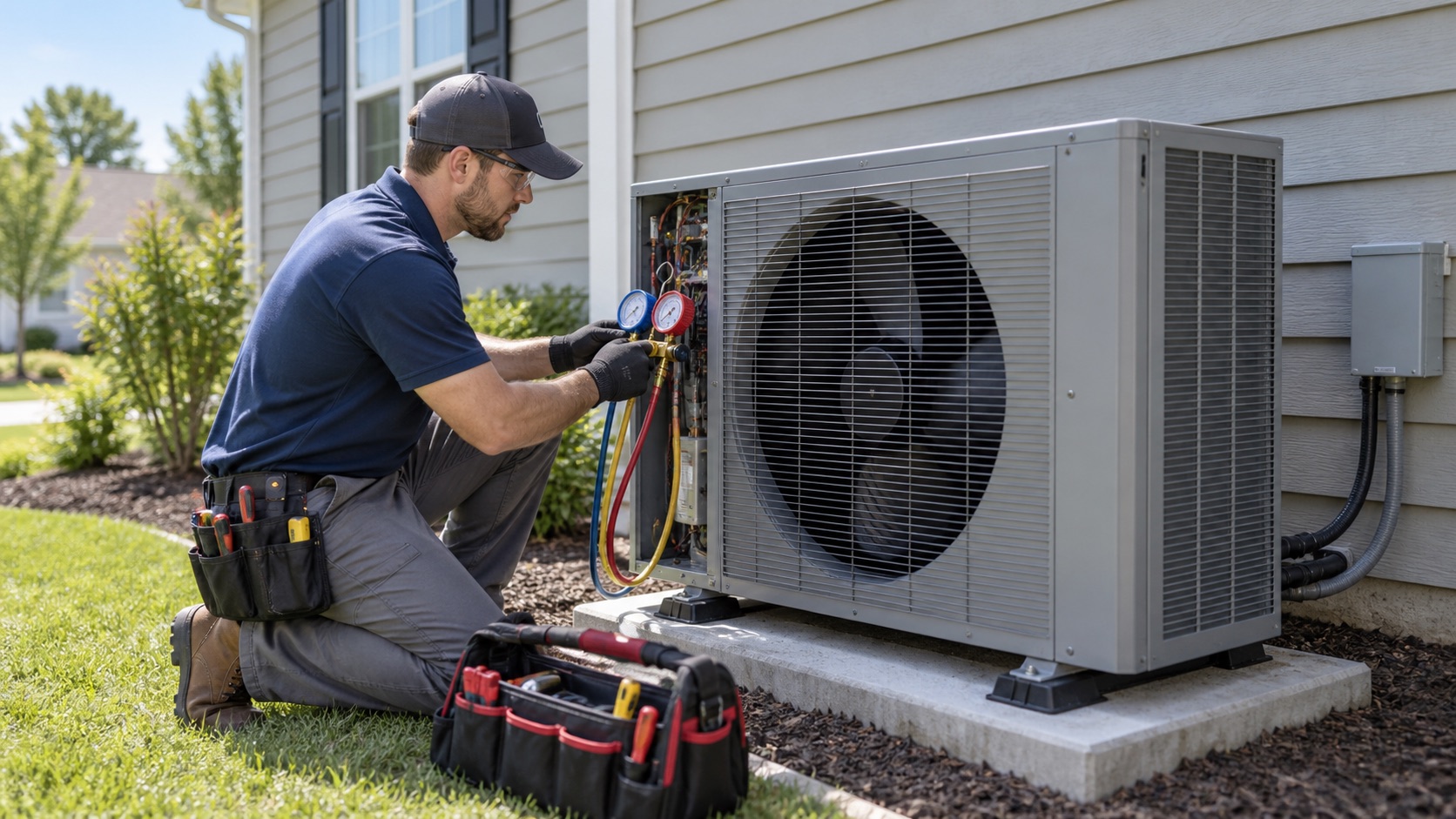
Ask what component failed, what test confirmed it, whether another condition caused the failure, and what happens if only that part is replaced. Error codes alone may not identify the root cause.
Evaluate the whole system
Age is one input, not a verdict. Review maintenance history, prior failures, corrosion, coil condition, compressor operation, furnace heat exchanger concerns, refrigerant, and whether indoor and outdoor units are properly matched.
Price replacement as a system
A replacement proposal should cover sizing, ducts, electrical, drains, line set, thermostat, pad, permits, disposal, startup, warranty registration, and commissioning.
Know when to get another opinion
Seek another diagnosis when a major replacement is proposed without measurements, the explanation changes, safety is used as pressure without documentation, or a costly repair is presented as the only option.
Related contractor research
Frequently asked questions
Is an old HVAC system automatically inefficient?
No. Actual condition, maintenance, sizing, ducts, controls, climate, and operating pattern affect performance. Age raises failure risk but does not replace diagnosis.
Should I replace both indoor and outdoor units?
Matched-system requirements, refrigerant, controls, efficiency ratings, warranty, and equipment condition affect the decision. Ask for the compatibility basis in writing.
What does HVAC commissioning mean?
It is the startup and verification process used to confirm airflow, refrigerant or temperature performance, controls, safety operation, and other installation requirements.
Can duct problems look like equipment failure?
Yes. Restrictive, leaking, poorly sized, or unbalanced ducts can cause weak rooms, noise, temperature problems, and equipment stress.
Editorial note
This guide provides general homeowner planning information. Contractor licensing, contracts, deposits, permits, insurance, and technical requirements vary by state, locality, property, and project. Verify requirements with the responsible authority and qualified professionals. Advertising does not replace ServiceGoat’s disclosed ranking standards.