Homeowner guide
A practical decision framework
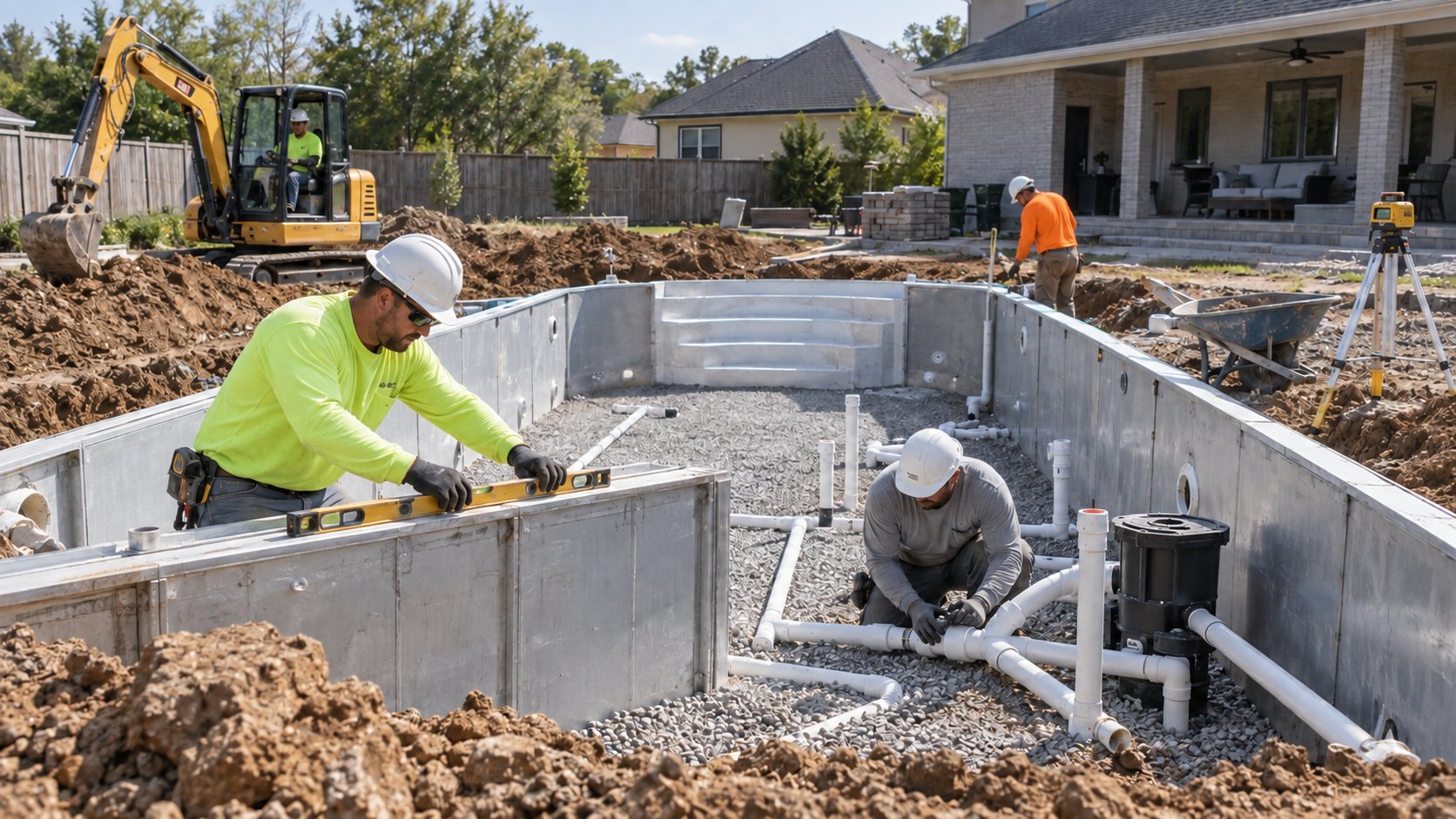
Direct answer: The best pool-builder questions assign responsibility for the entire disturbed yard, not just the vessel. Ask who controls design, access, excavation conditions, groundwater, utilities, structure, equipment, decking, drainage, fencing, permits, startup, restoration, and warranty service.
Key takeaways
1
Use a written responsibility matrix for every trade.
2
Price rock, groundwater, access, and restoration before excavation.
3
Tie payments to measurable construction milestones.
4
Separate equipment, shell, surface, and labor warranties.
Confirm product and site fit
Ask why the proposed pool type and model fit access, soil, groundwater, setbacks, grade, maintenance, climate, household use, and future service.
Assign construction responsibility
Identify who handles excavation, hauling, dewatering, plumbing, electrical, gas, bonding, equipment, decking, drainage, fencing, landscaping, permits, and inspections.
Control budget and schedule
Ask about allowances, unit prices, deposits, custom materials, milestones, weather, inspections, owner decisions, startup, punch list, and final payment.
Understand service after completion
Ask who performs startup, training, winterization, warranty calls, leak diagnosis, equipment service, water balancing, and structural warranty work.
Related contractor research
Frequently asked questions
What is the biggest pool contract risk?
Unassigned site conditions and restoration. Rock, groundwater, access damage, drainage, utilities, decking, fencing, and landscaping can create major changes.
Should pool equipment models be listed?
Yes. Pumps, filters, heaters, controls, sanitation, lights, covers, drains, and accessories should be specified.
Who is responsible for pool fencing?
The contract should assign design, installation, gate hardware, temporary barriers, permits, and final inspection responsibility.
When should final payment be due?
The contract should tie it to defined completion, inspections, startup, owner training, punch-list status, and required closeout documents.
Editorial note
This guide provides general planning information. Licensing, contracts, permits, deposits, insurance, technical standards, and safety requirements vary by location, property, and project. Verify critical requirements with the responsible authority and qualified professionals. Advertising does not replace ServiceGoat’s disclosed ranking standards.